
Communication training - an effective team that gets heard
For leaders, HR, teams and anyone who works with people - and wants to guess less and understand more.
See
video
See
video
It works best for people who work realistically with people and are affected by misunderstandings, tension or communication mismatches:
1.
For leaders and managers:
-
who wish to get the message across better to different people in the team,
-
who are dealing with situations of stress, tension, withdrawal, resistance,
-
who wish to better understand what is going on "beneath the surface" of behaviour and how to respond appropriately.
2.
For teams working under pressure:
-
accounting, customer service, sales, logistics, IT - anywhere where speed, errors and different communication styles create tensions,
-
where it appears fatigue from "constant miscommunication" or lack of understanding,
-
who wish to improve quality of cooperation and relationship climate, without having to 'rebuild everything'.
3.
For HR departments and those supporting employee development:
-
who are looking for a tool for working with relationships, communication and stress,
-
want to offer teams support "here and now"and not just long-term strategies.
4.
For coaches, facilitators, internal trainers:
-
as 1:1 and team working toolwhich allows you to quickly get to the heart of a communication problem,
-
to deepen awareness of action styles and reactions under stress.
Communication training creating
reactions that build.
Do you sometimes feel that you speak clearly and yet it hits a void? That you get along with some people straight away, while with others every conversation is a minefield? In teamwork, it's easy to get tired of constantly guessing at what someone meant - especially when there's pressure, deadlines, stress. Tensions build up, collaboration drifts apart and you're left with questions: "What pos1TP1It wrong?", "Is it me?", "Is it them?". At such moments, we often try even harder - speak more clearly, react faster, explain more. Except that it doesn't work, because the problem isn't in the level of engagement - it's in the communication styles that get passed around.
The Process Communication Model® is a tool that helps you recognise these differences and begin to act differently - more effectively, and with greater peace of mind. It teaches you how to speak the language that the other party really hears, how to respond to the first signs of stress and how to regain contact where a wall has appeared. PCM training is for those who work with people and want less frustration and more understanding. For those who no longer want to waste energy on pushing - but to build collaboration that makes sense.
Why is internal communication important?
Efficient interpersonal communication within a team is the key to building trust, cooperation and high performance. The ability to communicate clearly, communicate and convey information in a factual manner makes employees understand their roles better, solve problems faster and achieve business goals more effectively. A well-planned internal communication process strengthens the organisational culture and improves the quality of cooperation in any team.
What is the aim of the training?
The aim is to develop communication skills for effective dialogue and collaboration. Participation in the training - also in an online training format - allows you to acquire practical tools that you can use immediately at work. The programme is training and developmental in nature, focusing on developing the key competence of conscious and effective communication in a team. Ultimately, participants learn how to communicate in a way that supports collaboration, motivation and goal achievement, and the price of the training becomes an investment in real improvements in team performance.
Fed up...
...constant misunderstandings, even though you "make it clear"
...that people change beyond recognition under pressure
...the frustration that you get along with some people straight away and with others you still get passed over
...that "you have to be careful how you say something so that it doesn't explode".
...silence, resistance or passive "nodding" without commitment
...conflicts arising from conjecture and interpretation
You can do things differently with PCM...
...you learn to speak a language that the other person can really hear
...understand why this is happening - and how to respond to it
...you get to know specific communication styles and learn to recognise them
...you gain the tools to defuse tension before it escalates
...You find out what triggers motivation and commitment in different people
...You begin to rely on observation and intention, not judgement
Why us?

Programme

Practice

Experience

Is there other the road?
Sure you do - you can continue to get frustrated, explaining the same thing over and over again, hoping that 'someday we'll get along'. Or you can see that the problem isn't the people - it's how different we are in the way we communicate. And this is where change begins.
Programme:
- Filling in the questionnaire - online
- Participation in a workshop where you will be introduced to the key concepts of the PCM® and how to understand your results
- Individual coaching meeting - online
We have repeatedly proven that understanding one's own behaviour and the different response strategies of other człons of the team supports effective communication, building mutual respect and rozłoning one's stress.
Effect:
Participants will gain a deeper understanding of themselves and others by learning about their own PCM profiles and differences in communication styles, needs and stress reactions. This will make it easier for them to build understanding, avoid misunderstandings and consciously adjust the way they work together. The strategies developed together will allow them to better exploit the potential of the team and create a more supportive working environment.
Effect:
Participants will identify key challenges in team and leader collaboration and learn tools to move consciously from problem to constructive agreement. By working with the Moiso model and contracting, they will develop common rules for cooperation that take into account individual needs and personality differences. This will increase team cohesion and deal with tensions more effectively.
Meet the lead trainer:

Joanna
Gosk
I am a psychologist, the only certified transactional analyst in Poland and an AT teacher and supervisor in the field of organisation in contract with EATA (PTSTA-O), training instructor 101.
I co-founded the first School of Transactional Analysis in Poland, which today has reached its 43rd edition.
I am a member of the European Society of Transactional Analysis and the Polish Psychological Society. I am a recommended Level I trainer of the Polish Psychological Association. I have been teaching AT to others for 13 years. I have conducted 14 editions of the AT School and Academy.
I use AT in my coaching and team coaching work with managers, intervening in organisations, designing a change process with clients, in my work as a coach, Team Coach and agile coach.
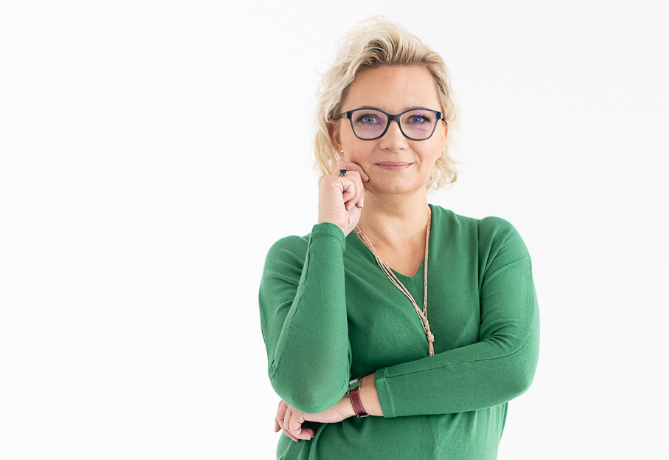
Catherine
Balcerkiewicz
Psychologist, recommended Level I trainer of the Polish Psychological Association, coach, organisational development consultant, Transactional Analysis Practitioner. Członek European Association for Transactional Analysis. President of the Polish Society of Transactional Analysis.
I co-founded the first School of Transactional Analysis in Poland, which today has reached 42 editions. I am the author and trainer of all editions of HR Master. I have been teaching AT for over 15 years. I provide training in Transactional Analysis at an advanced level for managers, trainers and consultants.
I work with HR departments, providing coaching and team coaching for their employees. I develop training programmes for senior management, manager academies tailored to the industry and company culture. I have been managing a variety of teams for 20 years. I have experience working with organisations, sales and customer service staff, leaders, managers, directors and CEOs.
I make it a pleasure for owners, managers and employees to come to the company and the results of their actions translate into more favourable financial results.

Marta
Drażyńska
I graduated in psychology and Polish philology from the Adam Mickiewicz University in Poznan. I did a 5-year advanced training in psychotherapy in the AT approach and trained in Gestalt psychotherapy.
I am a graduate of the "Study of Group Work Skills". - a programme recommended by the Polish Psychological Association. I completed a five-year Psychotherapy Study at the "Laboratory of Psychoeducation" in Warsaw. I am preparing for PTP certification. I work in the psychodynamic approach. I am a członk of the Polish Society of Transactional Analysis.
As a trainer, I deal with AT training and various interpersonal skills of managers in teams.

Anna
Pezacka-Gumna
I have been learning and using Transactional Analysis for 14 years. I have been educating others for many years as co-leader of the AT School and other AT-based trainings and workshops. I have had the opportunity to learn from many prominent Transactional Analysts from around the world (Sari van Poelie, Richard G. Erskine, Sue Eusden, Rosemary Napper, Birgitta Heilier, Alexandra Piotrowska, Tony White, Gregor and Masa Zvelc, John McNeel and others), attending international conferences and groups. I am currently preparing for the CTA (Certified Transactional Analyst) exam, culminating many years of study, practice and supervision.
By combining the skills to work in-depth with groups and the contextual knowledge of teams in an organisation with the competence to conduct team coaching, I was able to complete the relevant training and obtain the Team Coach Certificate.

Justyna
Byczkowska
My name is Justyna Byczkowska. I am a psychologist, psychosocial workshop trainer recommended by the Polish Psychological Association, coach, Transactional Analysis practitioner, individual and group psychotherapist. In my work, I am guided by the belief that the driving force behind people's effectiveness and productivity are the relationships and the culture in which they work. I believe that building good relationships, trust and a sense of psychological safety translates into committed, loyal and effective employees. I support my clients in achieving healthy effectiveness - the ability to achieve goals while nurturing people's wellbeing.
I work on the basis of a thorough recognition of my clients' situations and needs - I target their specific problems and develop tailored solutions. The programmes and interventions I offer are based on validated psychological knowledge and field-tested tools. I have been developing in the application of Transactional Analysis in business for 15 years and I am constantly deepening my psychological knowledge. I conduct complex development projects, team and individual coaching, crisis intervention and supervision. I specialise in methods of effective communication, collaboration, leadership development and occupational health psychology. I help build effective teams and support them through conflict situations.
Feedback from participants
Marzena
Rosler-Borakiewicz

Anna
Jacznik

Magdalena
Dzikowska
Our experience and years of practice in numbers
2
22
87

We invite you to
cooperation
Tell us about your needs and questions.
We will call you back and advise you.
Frequently asked questions
We first arrange a short phone call - to see together if PCM is a good solution for your team or organisation.
If the decision is yes, we arrange a convenient date for the workshop.
Before we meet, participants complete a short online questionnaire - based on this, an individual personality profile is created, which we work with during the training.
All this is to make the workshop as tailor-made as possible - and immediately useful for day-to-day collaboration.
Each person who wants to know his or her personality profile in terms of the Process Communication Model® receives a dedicated link to the questionnaire. It takes between 40 and 60 minutes to complete it. Once the questionnaire is completed, a comprehensive report is generated and sent from the Meeting Group secretariat to each person individually.
Typically, a PCM workshop lasts for two days, allowing you to learn the model and practise in different areas of communication and collaboration. However, the timing and scope of the training can be tailored to your needs - depending on what you want to focus on in particular: whether it is effective communication, team stress management, conflict resolution or motivation building.
This makes the workshop flexible and adapted to your reality.
The method of financing the training is agreed on an individual basis as part of a jointly developed training contract. Usually a VAT invoice with a 14-day payment period is issued after each activity carried out for the client.
